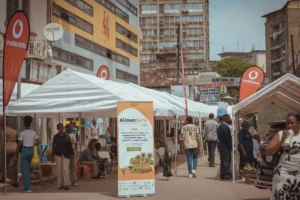
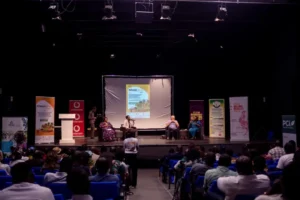
For several years now, the AlimenTerre Festival has been working to show Congolese farmers that it is possible to farm without using banned pesticides. This effort led to a ban on their use at festival sites beginning in 2024, in order to protect public health and the quality of food consumed in the DRC.
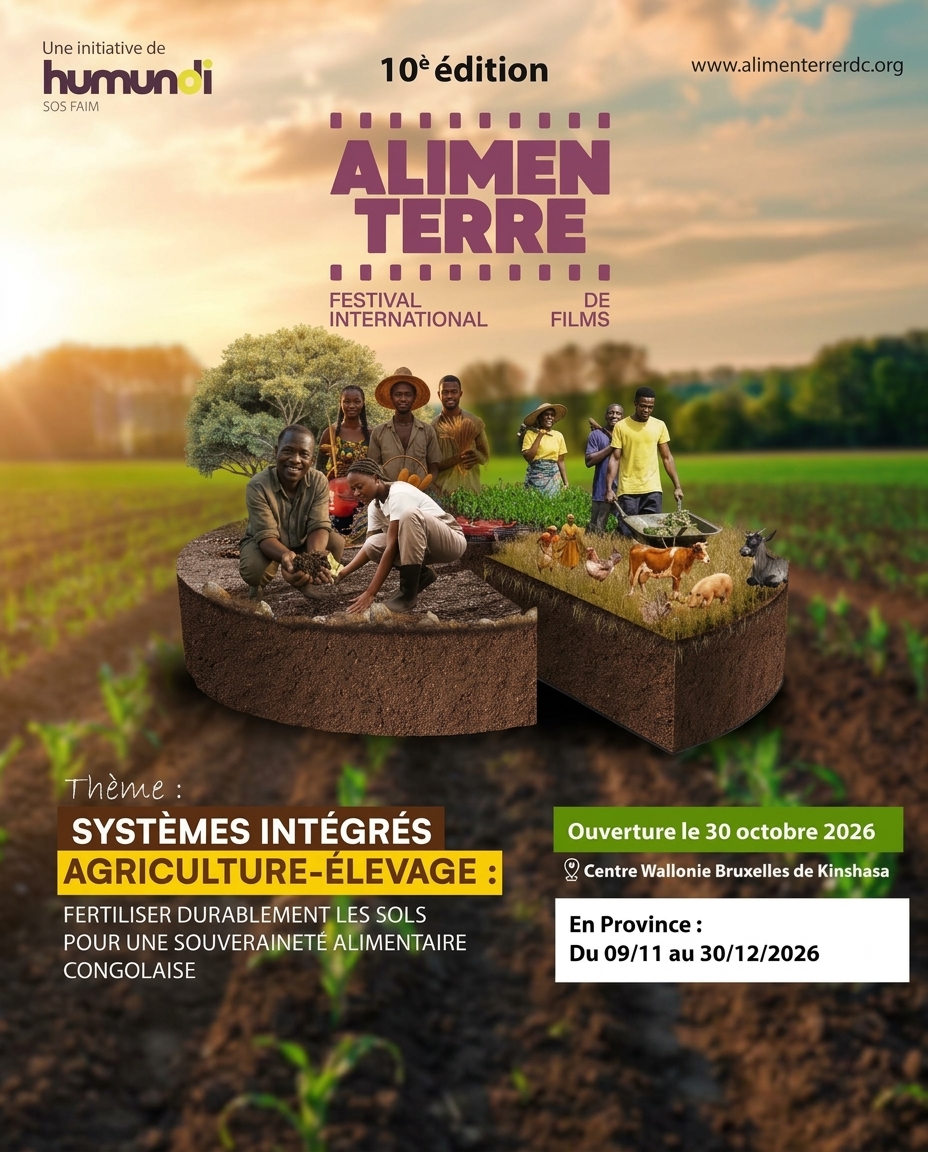
This is precisely what integrated crop-livestock systems make possible. By combining crop cultivation and livestock production on the same farm, producers have a natural and renewable source of organic manure, while the crops, in turn, provide feed for the animals. This virtuous cycle regenerates the soil, improves its structure and fertility, and supports abundant, high-quality production, season after season.
By choosing this theme for 2026, the AlimenTerre Festival remains true to the same conviction that has driven it since its inception: to show Congolese farmers that doing without banned pesticides is not only possible, but that there are concrete, accessible, and already proven solutions for naturally fertilizing the soil and increasing yields.
The “ Raconte la Terre ” film contest: Students from universities in the DRC use film to tell stories about sustainable food systems and agroecology (see the dedicated tab for full details).
The AlimenTerre Caravan—the festival’s traveling component—brings film screenings and activities beyond Kinshasa, into the provinces, as close as possible to producers and farming communities.
The People’s Forum : a space for free speech where citizens can voice their views on issues related to food, agriculture, and food sovereignty in the DRC.